


Type "is lab grown diamond worth buying" into Google and you land in two camps. One says these stones are worthless. The other says they are the smartest purchase you can make. If you are about to spend real money on a ring, a bangle or a pair of earrings, that is not much help.
At Cosmos, we make lab grown diamond jewellery, so we are not neutral. But we would rather you decide with the full picture. If you want to wear your diamond, the answer is yes. If you want to sell it later at a profit, the answer is no, and that is just as true of a mined one.
Are Lab-Grown Diamonds Worth Buying?
Yes, for most people who want to wear their diamonds. A lab grown diamond is a real diamond with the same chemistry, hardness and sparkle as a mined one, and it costs far less for the same size and grade. That means the same budget buys a bigger or better-cut stone. As an investment, though, it is not worth it, and neither is a mined diamond.
People who type "is lab grown diamond worth it" are usually asking one of two things. The first is whether the money is well spent. The second is whether the diamond will be worth something later. The first has a good answer. The second does not, for lab grown or mined stones, so it helps to keep the two questions apart.
Think about how you will use it. A pair of studs you put on every morning gives you far more for your money than a larger stone kept in a locker. Choose natural only if rarity or a billion-year story matters to you more than size and price, and be honest with yourself that the price you pay for that story will not come back.
Is a lab grown diamond cheaper than a natural one in India?
The short answer to "is lab grown diamond cheaper" is yes. There is no mining premium, and published savings from jewellers in India and the US vary depending on the stone, with the gap widening as carat weight goes up. Cosmos prices its pieces 60 to 95% below comparable mined diamond jewellery.
|
Lab grown diamond |
Natural diamond |
|
|
What it is |
A real diamond grown in a controlled environment |
A real diamond formed in the earth |
|
Chemistry and hardness |
Pure carbon, 10 on the Mohs scale |
Pure carbon, 10 on the Mohs scale |
|
Price for the same size and grade |
Lower, with no mining premium |
Higher |
|
Resale |
Less than you paid |
Less than you paid, usually a little more than lab grown |
|
Certificate |
IGI or GIA report |
GIA or IGI report |
|
The story |
Made in a lab, newer to the market |
Rarity and a long geological origin |
|
Cost of the gold setting |
The same |
The same |
That last row changes how much you save. Gold costs the same whichever diamond you choose, so the saving applies only to the diamond part of the price. On a heavy gold bangle, gold is most of the cost and the saving is smaller than the headline figure.
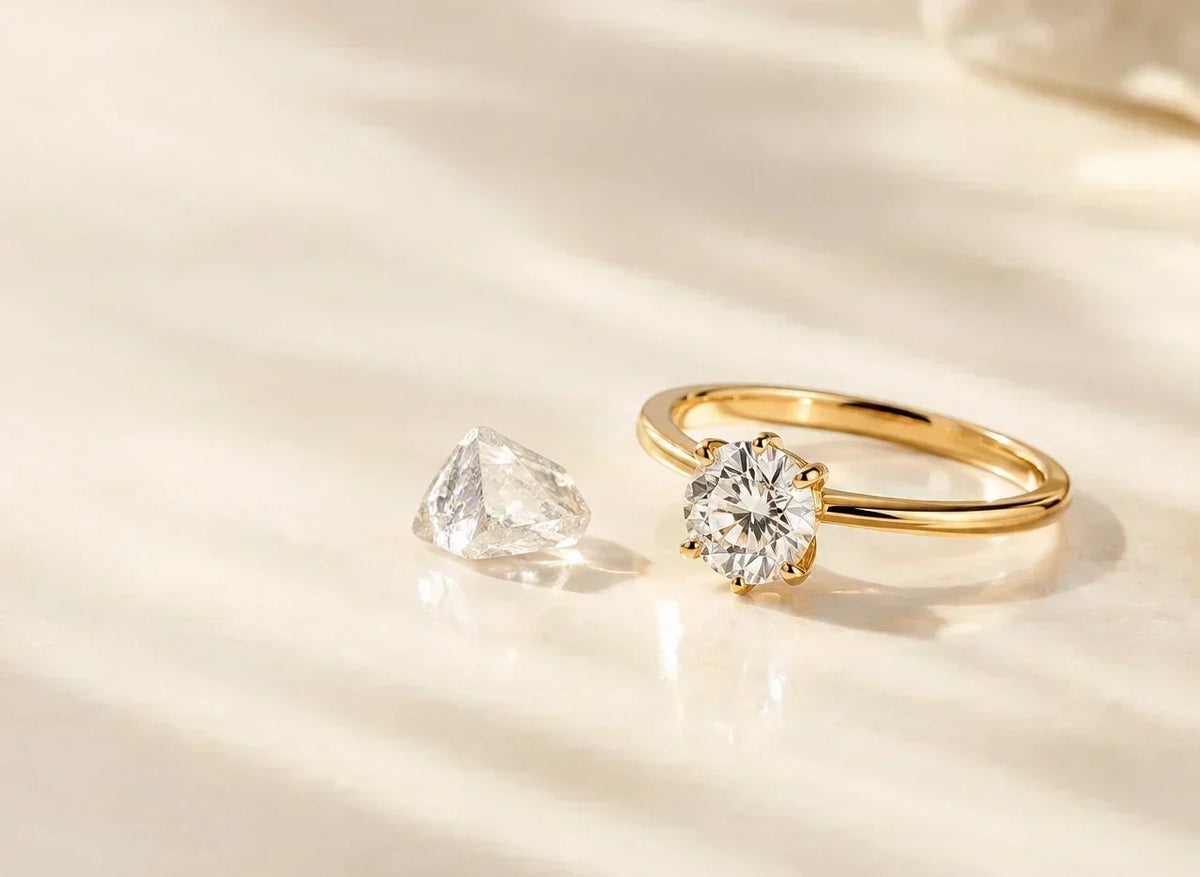
On a solitaire ring, the diamond is most of the cost and you save the most. You can compare carat weight easily in diamond rings, where the difference shows from the first look.
Do lab grown diamonds look and shine the same as natural diamonds?
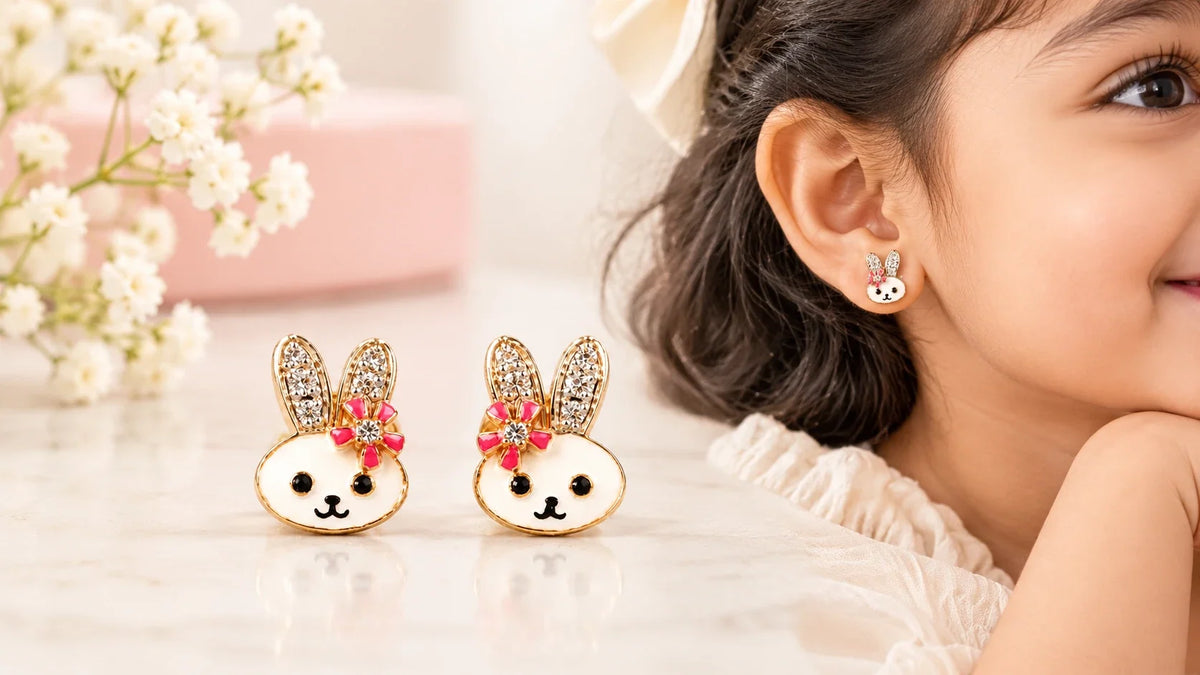
In 2018 the US Federal Trade Commission changed its Jewelry Guides so that the definition of a diamond no longer needs the word "natural". A lab grown diamond rates 10 on the Mohs scale, the same as a mined one, so it does not scratch or fade, and that is why a child's first pair from kids' diamond jewellery still looks new years later.
When a diamond looks dull, the cause is almost always oil, lotion or dust. A 10 to 15 minute soak in warm water with a drop of mild dish soap, a gentle scrub around the setting with a soft toothbrush and a pat dry with a lint-free cloth brings the sparkle back. Skip toothpaste, which is mildly abrasive and can scratch the gold, and follow the cleaning schedule in our diamond jewellery care guide. If a piece needs more than a soak, Cosmos lifetime support includes a complimentary professional ultrasonic clean and setting inspection.
A diamond that keeps its sparkle is also one you can exchange with confidence. At Cosmos, lifetime exchange covers all the jewellery we sell, and an eligible old piece is valued at 100% of the prevailing gold weight value plus 100% of the prevailing diamond value.
Many buyers worry that an exchange will quietly cost them more than they expected. Ours counts the full value of both the gold and the diamond, and what is left out (making charges, wastage and taxes) is listed before you buy, not after. With an independent certificate and a BIS hallmark behind every piece, you can show exactly what you are exchanging.
Are lab grown diamonds available in India?
Yes, and you do not have to buy one blind. Cosmos ships lab grown diamond jewellery across India, with free insured delivery on orders above Rs 5,000. See it in person at our lab grown diamond store in Bangalore, or at our stores in Vijayawada and Hyderabad, and find your nearest store in a minute. If you cannot visit, book a video call and a jewellery consultant will guide you.
So, are lab grown diamonds worth it? Yes, if you want real diamonds you will wear often. They are not a way to make money, and mined ones are no different. Tell us what the piece is for and your budget, and we will tell you honestly whether it suits you.
FAQs
Is a lab-grown diamond a good choice for an engagement ring?
Yes. It has the same hardness and sparkle as a mined diamond, so it suits daily wear, and the saving can buy a larger stone.
Do lab-grown diamonds hold their value over time?
Not like gold. Like mined diamonds, they resell for less than you paid, so buy to wear and plan around the exchange terms.
Is a bigger lab-grown diamond better value than a smaller natural one?
If size and sparkle matter most, yes. Choose the smaller natural stone only if rarity matters more to you than size.
Will people be able to tell my diamond is lab-grown?
No. It looks identical to a mined diamond, and even jewellers need specialist equipment to tell the two apart.
Is buying lab-grown considered settling for less?
No. It is a real, certified diamond. What you give up is the mining story and some resale value, not quality or sparkle.
Who should consider a lab-grown diamond over a natural one?
Anyone who wants more diamond for the budget, plans to wear it often and does not need it to hold resale value.