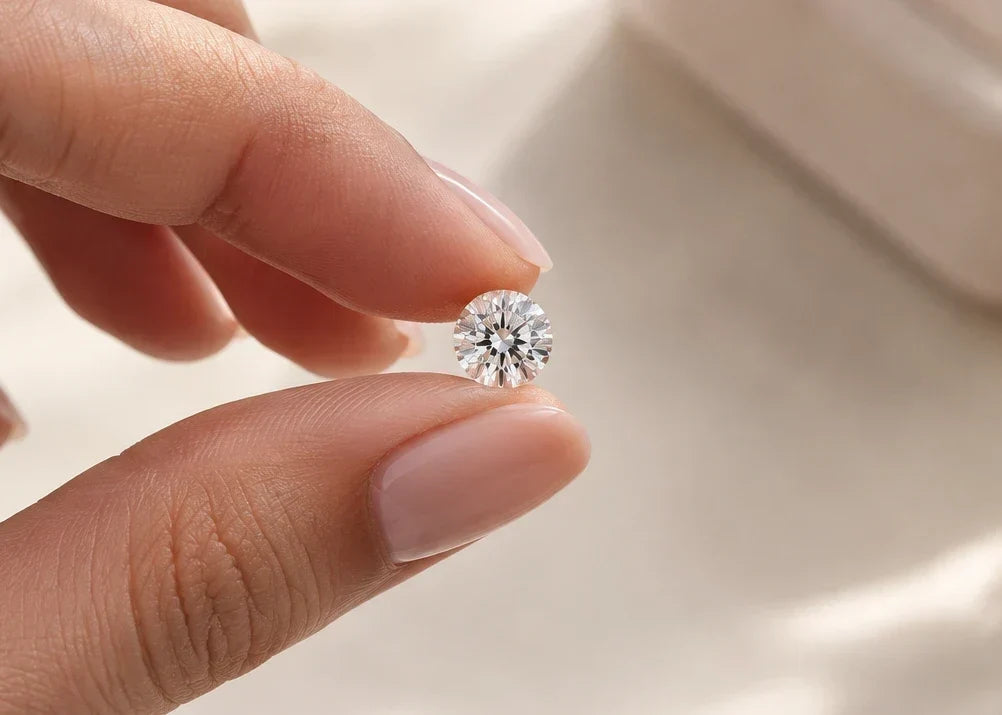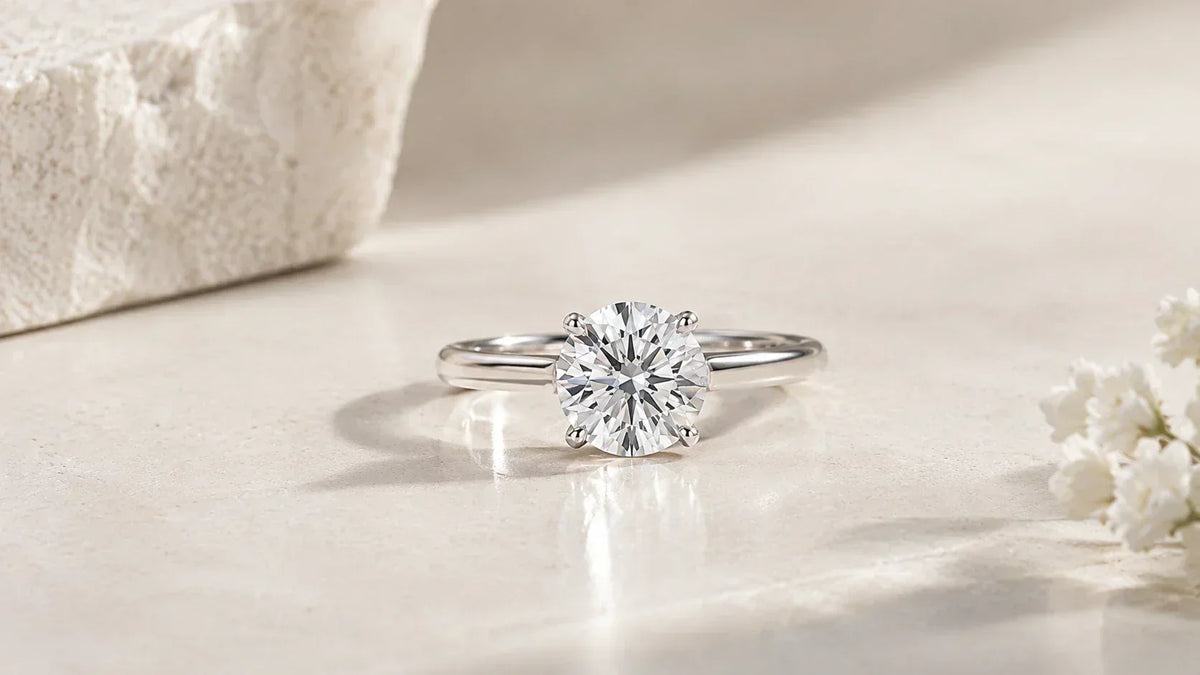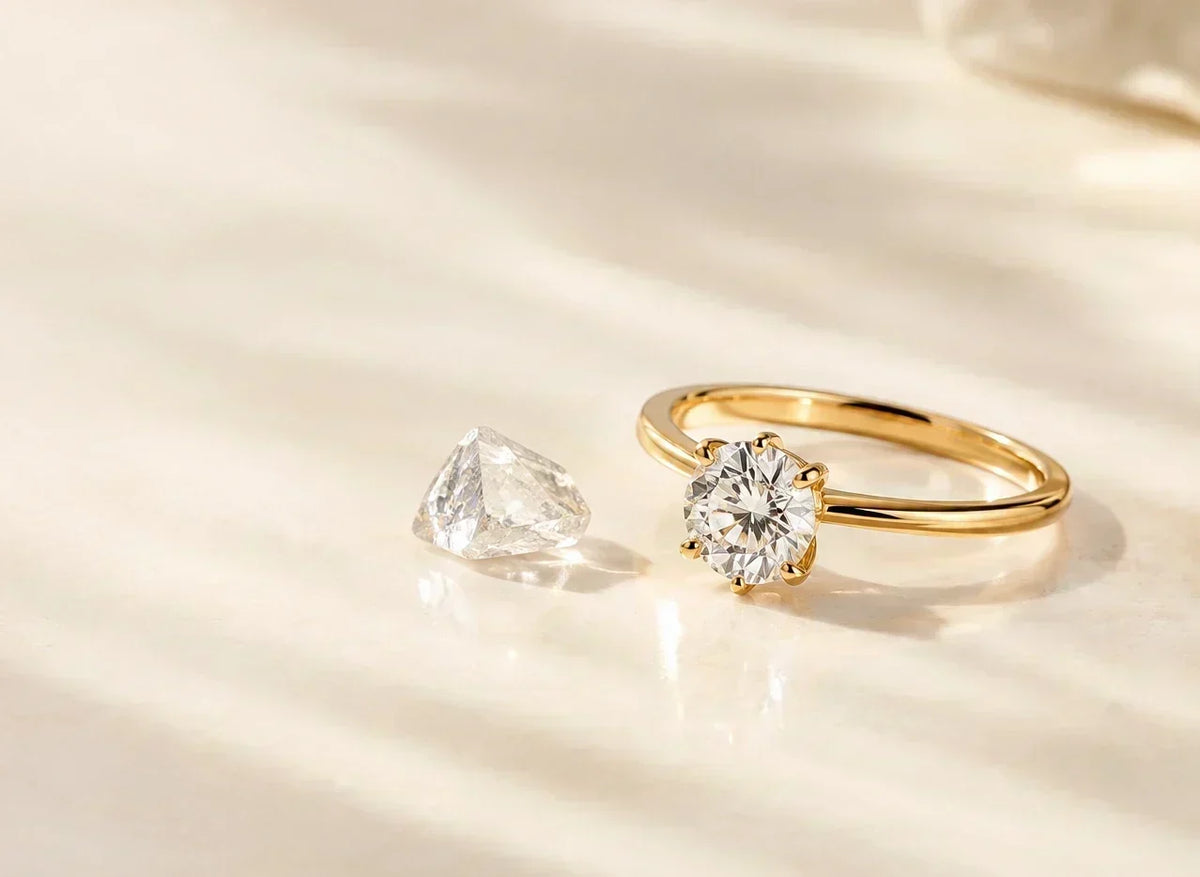



Every lab grown diamond starts life the same way a natural one does: as pure carbon. The difference is where that carbon crystallises. Instead of forming under the earth's crust over a billion years or more, a lab grown diamond takes shape inside a growth chamber. There, scientists recreate the same heat, pressure and chemistry found deep underground, only compressed into weeks rather than geological time. Understanding how lab grown diamonds are made helps explain why the finished stone carries the same brilliance, hardness and certification as a mined diamond. It just skips the wait, and the mining footprint, behind it.
This piece walks through the lab grown diamonds process end to end. That covers the two methods used to grow a diamond and the materials each one relies on. It also covers how long the process takes, and how a rough stone becomes a finished, certified gem ready to be set into jewellery. If you're new to lab grown diamonds altogether, our explainer on what lab grown diamonds are covers the basics before you get into the science below.
From a Single Diamond Seed to a Rough Stone
Every method used in the lab grown diamond manufacturing process begins in the same place. It starts with a diamond seed, a thin slice of an existing diamond that acts as the template for everything that follows. From there, carbon is added to that seed until it grows into a full-sized rough diamond. There are two established ways to make that happen. Chemical Vapour Deposition (CVD) builds the diamond gradually, layer by layer, inside a heated gas chamber. High Pressure High Temperature (HPHT) takes a more direct route, using extreme pressure to force carbon to crystallise around the seed in a matter of days. Both start from the same point and arrive at the same result: a rough diamond that's chemically and structurally identical to one pulled from the ground.
The CVD Process, Step by Step
CVD is the method COSMOS diamonds are grown by. It works more like construction than compression, adding material to the seed in careful, controlled layers.
-
A thin diamond seed slice is cleaned and placed inside a vacuum chamber, since even microscopic dust can disrupt the crystal structure as it forms
-
The chamber is sealed and filled with a precise mix of carbon-rich gases, typically methane and hydrogen
-
The gases are heated to extreme temperatures, causing them to break down into plasma
-
Free carbon atoms within that plasma bond to the seed one atomic layer at a time
-
Growth continues this way for two to four weeks until the rough diamond reaches the size needed for cutting
The build-up is gradual and closely monitored throughout. That's what gives CVD growers a high degree of control over the finished stone's colour and clarity from the very start.
The HPHT Process, Step by Step
HPHT takes a different route to the same outcome. A carbon source, usually graphite, is placed alongside a diamond seed inside a specialised press. A metal catalyst is then added to help the carbon crystallise more easily. The whole assembly is subjected to extreme heat and pressure, delivered through electric pulses, until the carbon dissolves and re-forms as diamond around the seed. It's a faster process than CVD, often taking only days rather than weeks. The trade-off is heavier, more specialised equipment. HPHT can also leave microscopic traces of the metal catalyst behind, usually invisible without laboratory-grade magnification.
Choosing between the two isn't really about which method is "better" - it comes down to what each suits. See Types of Lab Grown Diamonds: CVD vs HPHT Explained for which type fits your priorities as a buyer.
From Rough Diamond to Certified COSMOS Stone
Once a rough diamond reaches its target size, it's removed from the growth chamber and put through a round of quality checks. Only the best stones move on to cutting and polishing. Every COSMOS diamond is grown As Grown, meaning no post-growth treatment is used to alter its colour or clarity. Each one is also graded at Type IIA purity, the same rarest classification given to the finest mined diamonds in existence. From there, skilled artisans plan the cut by hand to draw out maximum brilliance. The finished stone is then graded and certified by an independent laboratory before it's ever set into a piece of jewellery. Once it's set into a finished piece, the same daily care applies as with any fine diamond jewellery: gentle cleaning, and keeping it away from harsh chemicals or knocks that could damage the setting.
Why Lab Grown and Mined Diamonds Are Indistinguishable
Regardless of which method grows them, lab grown diamonds share the exact same carbon structure, hardness and optical properties as diamonds formed underground. That's precisely why gemologists can't tell the two apart by sight, even under magnification. The only real difference between them is origin, not composition, and that's exactly what an independent certification report exists to record. It's also why the question of how a diamond was made matters more to a lab than it ever does to the naked eye.
That covers composition - for the fuller picture on price, resale value and how the two actually compare as a purchase, see Lab-Grown Diamonds vs Natural Diamonds: Which One Should You Choose?
Made With Confidence
Understanding how lab grown diamonds are made makes it easier to look past marketing language. It lets you focus on what the process actually delivers: a real diamond, grown under controlled conditions and verified afterwards, not assumed. What actually matters, in the end, is the seed quality and the precision of the growth process. It also matters how transparently that process is documented once the stone is finished.
Every COSMOS diamond is grown using the CVD process from Type IIA seeds. Each one is finished without post-growth treatment, independently certified, and set in BIS-hallmarked gold, with the certification available to verify directly. Browse the COSMOS collection of IGI-certified lab grown diamond jewellery to see where that process ends up before making a choice.
Frequently Asked Questions
How are lab grown diamonds made?
They're grown using CVD or HPHT, both starting from a diamond seed and building carbon around it until a full diamond forms.
What is the CVD process for lab grown diamonds?
CVD grows a diamond seed inside a vacuum chamber filled with heated, carbon-rich gas, adding carbon atoms layer by layer.
How long does it take to grow a lab grown diamond?
CVD diamonds, including COSMOS diamonds, take two to four weeks. HPHT diamonds can grow in a matter of days.
What materials are used to make lab grown diamonds?
A diamond seed plus a carbon source: methane and hydrogen gas for CVD, or graphite and a metal catalyst for HPHT.
Are lab grown diamonds made from real diamonds?
Yes. Every lab grown diamond starts from a genuine diamond seed and crystallises into the same structure as any diamond.
Are lab grown diamonds identical to natural diamonds?
Chemically, physically and optically, yes. The only real difference is how each one formed, not what it's made of.
Can you tell how a lab grown diamond was made?
Not by eye. Telling CVD from HPHT, or lab grown from mined, needs specialised lab equipment like spectroscopy.
Are lab grown diamonds certified?
Yes. Independent labs like IGI grade lab grown diamonds on the same 4Cs used for mined diamonds, and confirm origin.