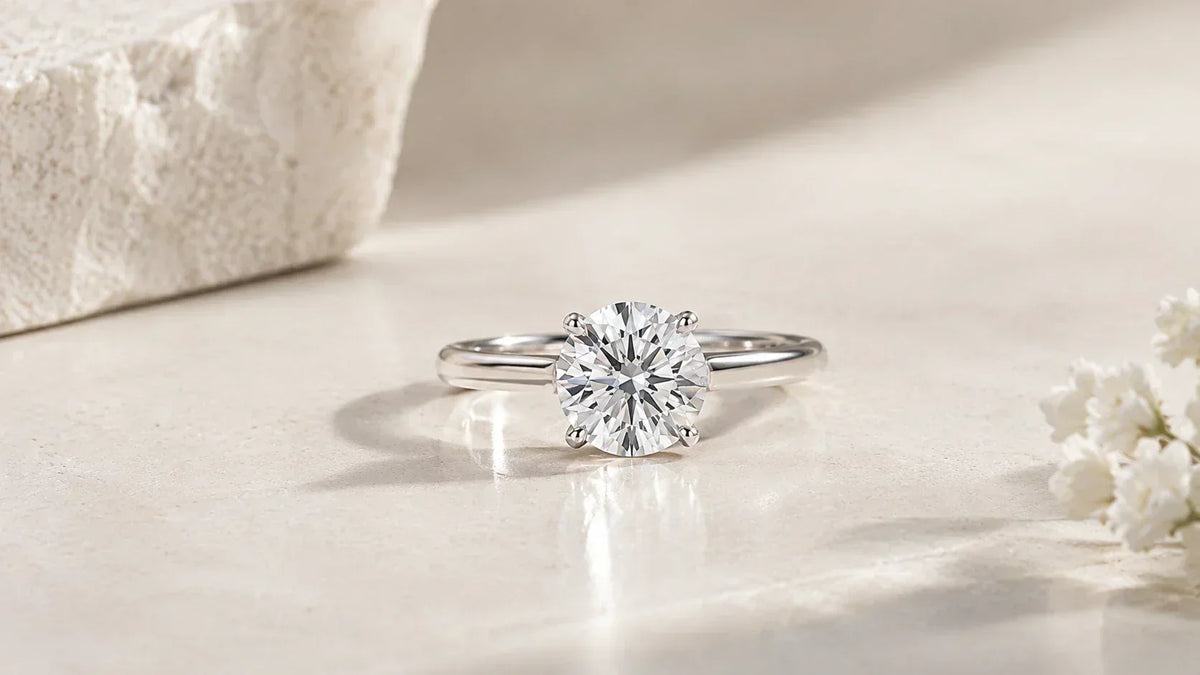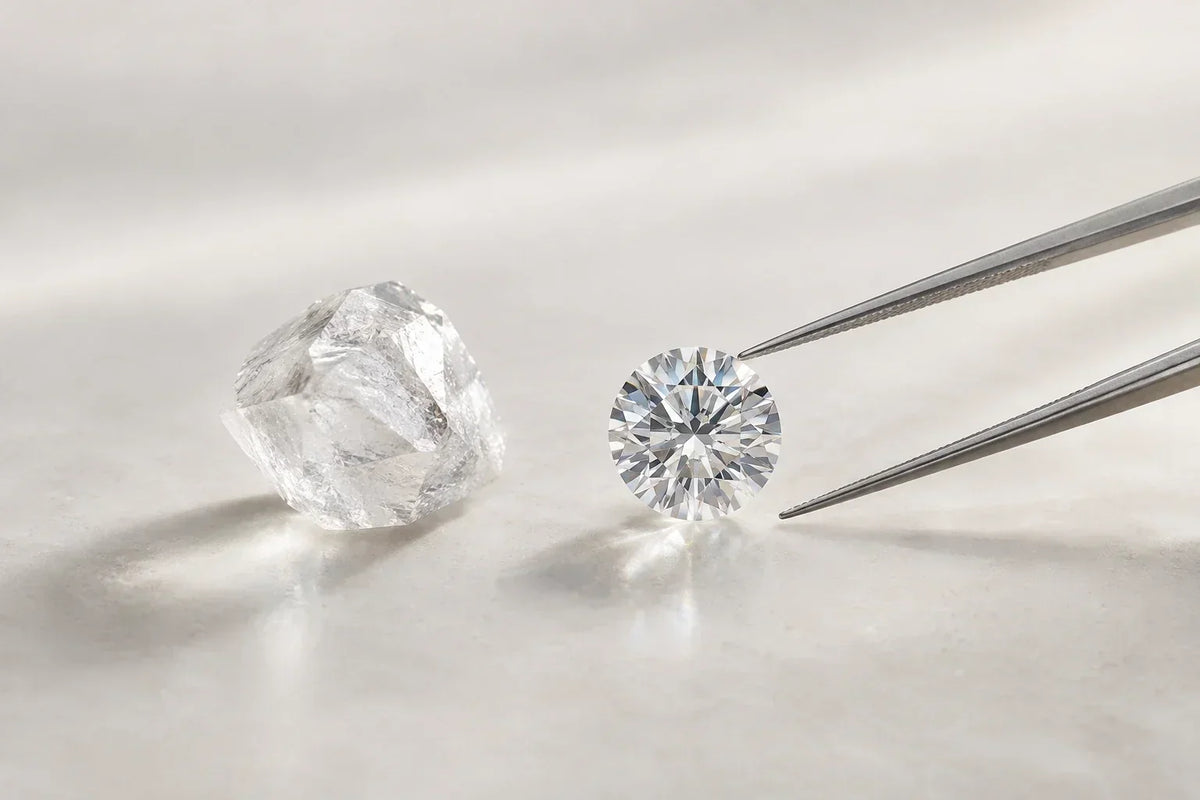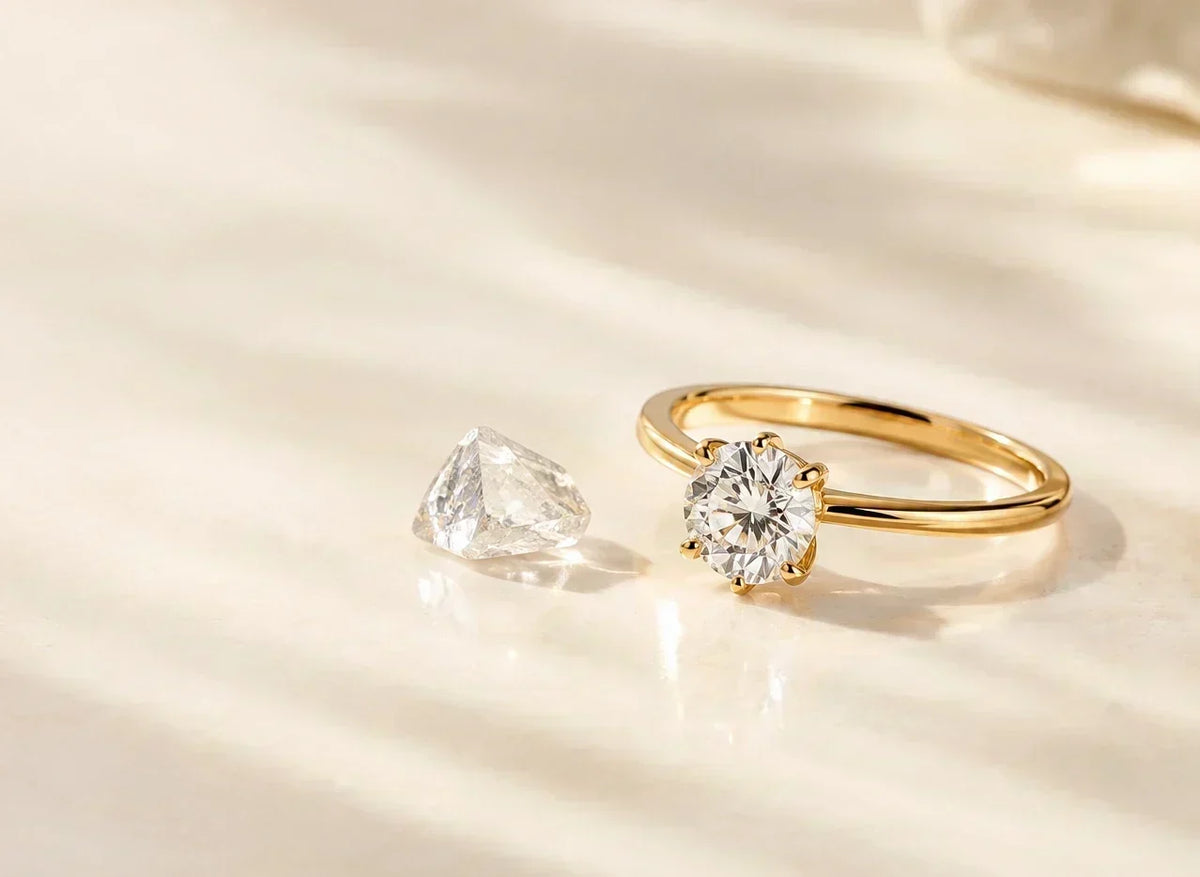



Lab-grown diamonds have moved from a niche curiosity to a mainstream choice in just the past decade, and the comparison to natural diamonds comes up in almost every buying decision now.
Here's what surprises people: both are real diamonds. The debate isn't real versus fake; it's origin, price, durability, value and ethics. This guide breaks down each factor so you can decide which fits you. If you're still working out the basics of what lab-grown diamonds actually are, our complete guide covers that first - this piece picks up from there.
What Are Natural Diamonds?
Natural diamonds form deep inside the earth, roughly 100 miles down, under intense heat and pressure over 1 to 3 billion years, before volcanic activity carries them closer to the surface. Mining them means locating these deposits and extracting the rough stones, a resource-intensive process that's part of why they're considered rare. That rarity, combined with centuries of cultural symbolism around love and commitment, is what built their traditional appeal.
What Are Lab-Grown Diamonds?
Lab-grown diamonds are created in controlled facilities using one of two methods: HPHT, which replicates the earth's heat and pressure using a growth cell, or CVD, which builds a diamond layer by layer from carbon-rich gas in a plasma chamber. Both start from a diamond seed and grow an actual diamond crystal, chemically and physically identical to a mined one. Lab-grown does not mean fake, imitation, or simulated; it means grown somewhere other than underground, which is exactly the space Cosmos was built around.
For the full mechanics behind each process, see How Lab Grown Diamonds Are Made, or Types of Lab Grown Diamonds: CVD vs HPHT Explained if you're deciding which type suits you.
Lab-Grown Diamonds vs Natural Diamonds: Key Differences
The two diamonds are chemically identical, so the real differences show up in origin, price, durability, ethics and long-term value, not in the stone itself. Here's how they actually compare, factor by factor.
Origin and Formation
Natural diamonds form underground over billions of years. Lab-grown diamonds form in a facility over a few weeks to a couple of months. That's the entire origin story; everything else follows from this one difference.
Appearance and Quality
Both are graded on the same 4Cs, cut, colour, clarity and carat, by the same labs. There's no visible difference to the naked eye or even under a jeweller's loupe. A certified grading report is what tells you what you're actually buying, not appearance.
Price Comparison
Lab-grown diamonds typically cost 60 to 95% less than a natural diamond of comparable size and quality, largely because production doesn't carry mining's scarcity premium or extraction costs. Natural diamond pricing is driven by rarity, cut quality and market demand. For the same budget, lab-grown usually buys a noticeably larger or higher-clarity stone. You can browse the full Cosmos Lab Grown Diamonds collection to see what that looks like in practice.
Durability
Both are diamonds, so both score a 10 on the Mohs hardness scale, the hardest natural material used in jewellery. Both hold up to daily wear in an engagement ring or any other piece equally well. Durability isn't a point of difference between the two.
Ethical and Environmental Considerations
Diamond mining has documented environmental and, historically, labour concerns in some regions, though many mined diamonds now move through certification frameworks. Lab-grown production avoids land disturbance but requires significant energy, and its footprint depends on the power source behind it. Ethics here depend on the specific producer, not the category.
Rarity and Long-Term Value
Natural diamonds are scarce by nature. Lab-grown diamonds can be made to meet demand, so they don't carry the same rarity premium. In the lab-grown diamonds vs natural diamonds question, resale is the one area where mined stones still hold an edge, though that only matters if you're selling on the open market.
For most buyers, the bigger question is what happens if you want to sell or upgrade later. Cosmos answers that with a buyback: the diamond is bought back at 100% of its prevailing value and the gold at 100% of the current metal rate, so there's no pawnbroker or resale listing to deal with. Making charges, wastage and taxes sit outside that figure, and any discount used on the original order is deducted, so it's worth reading the full policy before you buy.
No one can tell you what any diamond will be worth years from now. What Cosmos gives you is a stated route to sell or exchange the piece back through the brand itself. How well you care for the piece plays into its value too; our care guide covers how to keep it looking its best for years.
Lab-Grown vs Natural Diamonds: Pros and Cons
|
Lab-Grown Diamonds |
Natural Diamonds |
|
|
Price |
60–95% less for the same size/quality |
Higher, scarcity-driven |
|
Rarity |
Can be produced to meet demand |
Naturally scarce |
|
Resale value |
Generally lower vs. price paid |
Established, though still below retail |
|
Environmental impact |
No mining; energy use varies |
Land disturbance, varies by mine |
|
Durability |
10 on Mohs scale |
10 on Mohs scale |
|
Certification |
IGI, GIA, same 4Cs |
Same labs, same 4Cs |
Why Choose Lab-Grown from Cosmos
If lab-grown is the direction you're leaning, here's what sets Cosmos apart: every diamond carries IGI certification with a verifiable, laser-inscribed report number, not a promise you have to take on faith. Each stone sits in BIS hallmarked gold, and every purchase comes with a 100% buyback promise and exchange anytime, so today's decision doesn't have to be final.
You can see it all in person too, at stores in Bengaluru's HSR Layout or Vijayawada's Governor Peta, or talk it through with a stylist over WhatsApp or video call before you decide. Explore Cosmos Lab-Grown Diamonds.
FAQs
Are lab grown diamonds real diamonds?
Yes. People often search "lab grown diamonds vs real diamonds" as though they're different things, but a lab-grown diamond has the same composition and structure as a mined one. It's a real diamond grown in a lab, not a simulant.
Can you tell the difference between a lab grown diamond and a natural diamond?
Not visually, and not with a standard jeweller's tool. Only specialised lab equipment checking growth patterns and trace elements can identify origin, which is why certification matters more than inspection.
Do lab grown diamonds have the same sparkle as natural diamonds?
Yes. Since both have identical optical properties, refractive index and light dispersion, they sparkle the same way. A well-cut stone looks the same whether it's mined or grown.
Are lab grown diamonds certified like natural diamonds?
Yes, when bought from a reputable source. IGI, GIA and other labs grade lab-grown diamonds using the same 4Cs framework and disclose origin on the report. Not every stone on the market carries one, so check before buying.
Are lab grown diamonds cheaper than natural diamonds?
Yes, typically 60 to 95% less for a comparable size and quality, since there's no mining cost or scarcity premium built into the price.
Do lab grown diamonds have resale value?
Some, but generally less than what you paid, and currently less than natural diamonds tend to hold. Retailer buyback or exchange programmes, where available, are worth checking before you buy.
Should I choose a lab grown or natural diamond for an engagement ring?
Either works structurally, both are equally durable and hard to tell apart. It comes down to budget and what matters more to you: a larger, more affordable stone, or a naturally rare one with established resale history.
Which is better, lab grown or natural diamonds?
Neither is objectively better. In the lab grown diamonds vs natural diamonds decision, lab-grown wins on price and lower environmental land impact; natural wins on rarity and established resale value. The right choice depends on what you're optimising for.